33
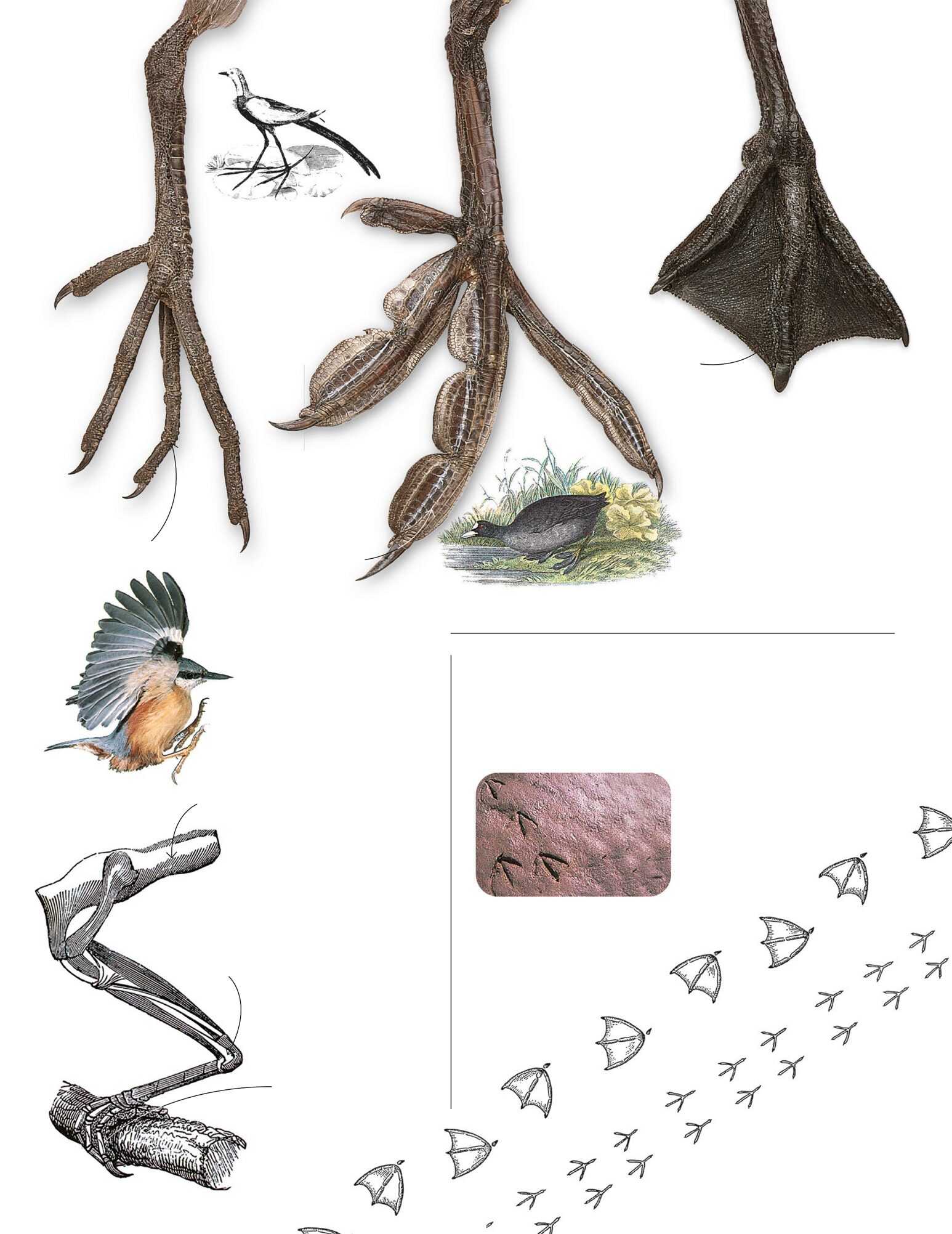
Waders
Wading birds
have long
toes to
prevent them
sinking into
soft mud.
Lily-trotter
Jacanas can walk
over floating
plants on their
long, thin toes.
Flanged feet
The coot has double flanges
of scaly skin that extend
from the toe bones. During
swimming, the flanges open
out as the foot moves
backwards, and closes as
it moves forwards.
Canada
goose foot
Moorhen
foot
Elongated, widely
spread toes
Scaly flange
aids swimming
Coot
foot
Coot
Webbed feet
Ducks, geese, swans, gulls,
and many seabirds have
webbed feet for efficient
swimming. Petrels can almost
“walk” on water by pattering
with their webbed feet and
flapping their wings, while
waterfowl use their feet as
waterbrakes when landing.
Webbed toes
for swimming
Legs for
perching
Perching birds have a
special mechanism to
prevent them falling
off perches. When a
perching bird lands on
a branch, its weight
makes its leg tendons
tighten and clamp its
toes tightly shut. To
take off, the bird
contracts its toe
muscles, the foot
springs open, and it
can then fly away.
Nuthatch
landing
Perching
bird’s leg
Toes clamp to
perch when bird
rests its weight on
the foot
Walking tracks
Instead of hopping, large
birds transfer their weight
from foot to foot by walking.
Hopping tracks
Small birds, particularly
those that live in woodland,
hop on the ground.
Bird tracks
Birds move on the ground in one of two ways. Many smaller
birds hop, as they can easily lift their body weight by flexing
their feet. Larger birds cannot hop, and so walk instead.
Tracks in mud
Bird tracks are best
seen in wet mud and
fresh snow.
Goose
tracks
Finch
tracks
Thigh
bone
Ankle
joint